Why We Hide: Masks, Truth, and Therapy
One of my teachers once asked, “Masks—where are your faces?”
It is a question that lingers. Not because we are insincere, but because hiding is deeply human. We move through the world with different versions of ourselves—professional, social, relational—revealing and concealing in ways that are often wise, and rarely accidental.
From a psychological perspective, what we hide is not simply avoidance. It is protection.
As existential psychoanalyst Michael Guy Thompson has suggested, much of what we call the unconscious is not deeply buried, but held just outside awareness—not because it is unknown, but because it is not yet bearable to know. To truly encounter oneself is not a neutral act. It asks something of us. It calls us into response.
In this light, our “masks” are not signs of failure, but of adaptation. We reveal ourselves selectively because the world does not always feel safe enough for full exposure—and because, at times, we are not yet ready to face what we might find.
And yet, there is also a longing—to be seen more fully, and to remain intact in the presence of another.
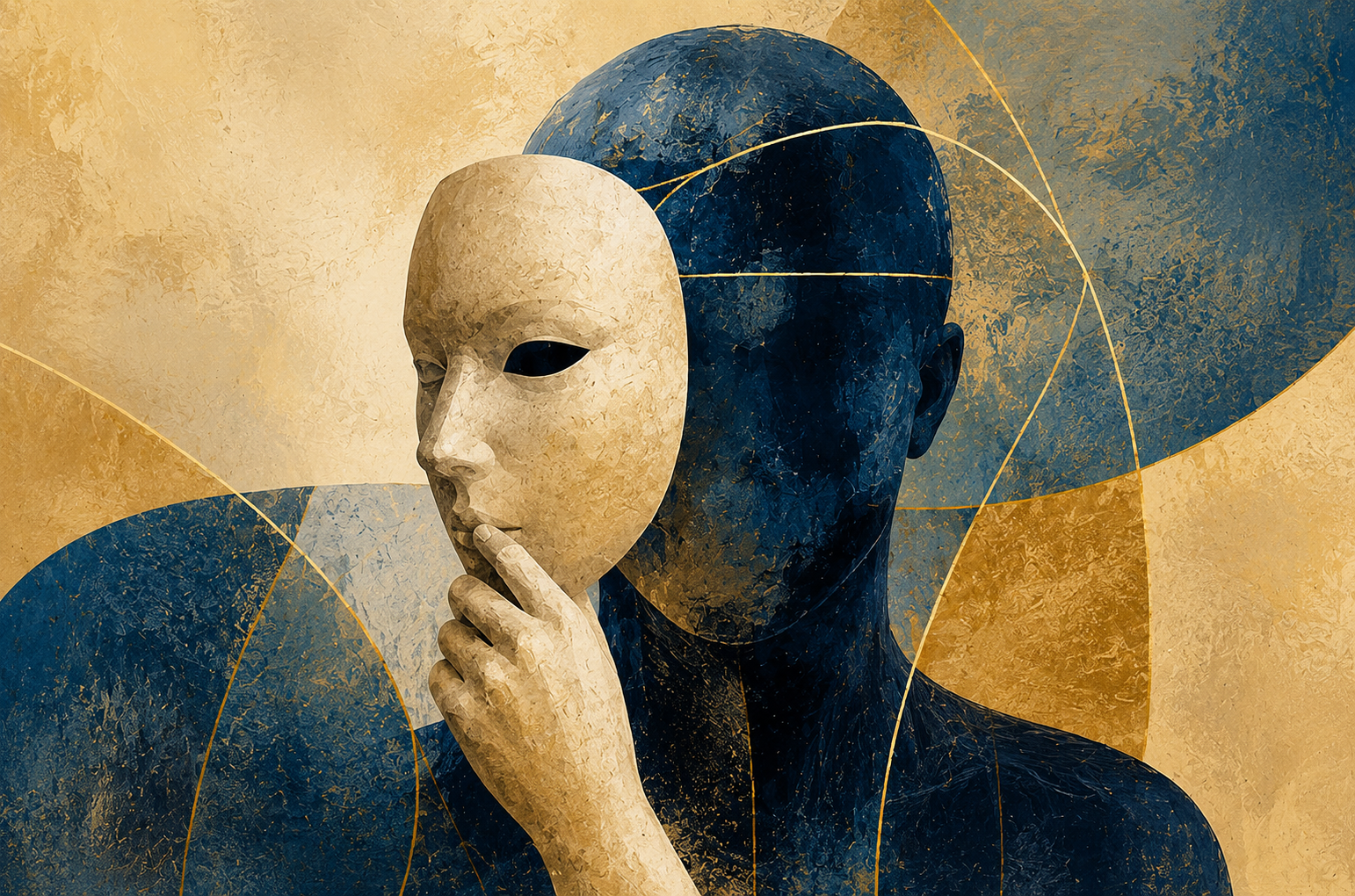
We catch glimpses of this longing in many areas of life. Even rituals, such as the lifting of a wedding veil, can be understood less as tradition alone and more as an expression of this hope: that there may be moments in which we can be known more deeply, without losing ourselves.
But therapy reminds us that authenticity is not constant exposure. Truth has its own rhythm.
Oscar Wilde once wrote, “Man is least himself when he speaks in his own person. Give him a mask, and he will tell you the truth.” The mask does not only conceal; at times, it allows something more honest to emerge.
Irvin Yalom similarly observed that self-revelation can be frightening because it brings us into contact with life’s most difficult realities—freedom, isolation, responsibility, and the risk of not being accepted as we are. Under certain conditions, indirect expression—through metaphor, story, or even silence—can make truth more accessible, more bearable.
Therapy makes room for this complexity.

It is not a space that demands immediate openness, nor does it shame us for what we hide. Instead, it creates the conditions under which a person can begin, gradually, to encounter themselves more fully. What has been held at a distance can come into awareness at a pace that does not overwhelm.
In that process, certain questions begin to emerge—not as demands, but as invitations:
What do I feel but avoid naming?
Where have I held back from others—or from myself?
What am I protecting, and at what cost?
Who am I, beneath the roles I have learned to inhabit?
These are not questions that can be answered all at once. Nor should they be.
The work of therapy is not to strip away every defense, but to understand them. To recognize when they serve us—and when they begin to limit us. Over time, something subtle begins to shift. What once felt too much to face becomes, gradually, something we can hold.

The poet W. B. Yeats wrote that “too long a sacrifice can make a stone of the heart.” Therapy resists that hardening. It offers a place where a person can remain open without becoming overwhelmed, where strength is not measured by endurance alone, but by the capacity to stay in contact with one’s inner life.
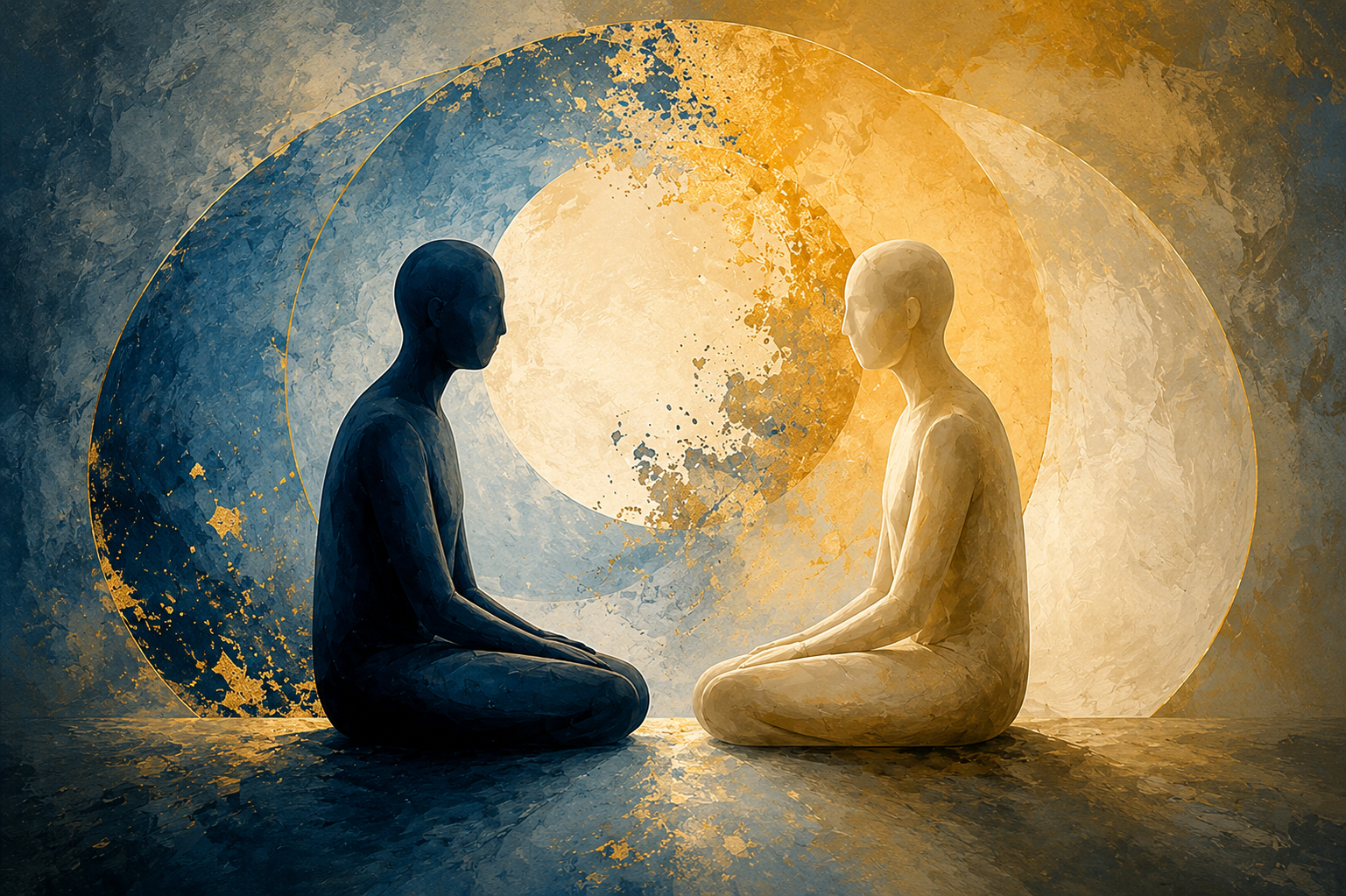
Again and again, therapy returns us to relationship—both with ourselves and with others. It is a space of encounter, where something more genuine can begin to take shape.
Authenticity, in this sense, is not the absence of masks. It is the growing capacity to know when we are hiding, why we are hiding, and when it may be possible to risk being seen.
And perhaps most importantly, to discover that when we are seen—gradually, honestly—we are not undone.
We are met.
About the Author
Randi Wren, MA, BCC is a pre-licensed Marriage and Family Therapist Trainee and practicum clinician at the Free Association Clinic for Existential Psychotherapy. She offers a strength- and meaning-based, trauma-informed approach grounded in psychodynamic and existential perspectives.
Randi works with adults experiencing depression, anxiety, grief and loss, relationship challenges, procrastination, and difficulties with motivation, connection, and life direction. Many of the people she sees are navigating major transitions — illness, caregiving, professional stress, relationships, identity shifts, or periods of uncertainty — and may feel overwhelmed, disconnected, or unsure how to move forward, even while sensing there is more life to be lived.
With a background in hospital, hospice, and cancer center chaplaincy, Randi brings a grounded, compassionate presence to emotionally complex situations. She is particularly attentive to the role of trust, reflection, and steadiness within the therapeutic relationship, understanding that meaningful change often begins when clients feel met, and understood.
Her work is relational and collaborative, integrating psychodynamic, existential, and narrative approaches. Therapy focuses on understanding emotional patterns, strengthening inner resources, and supporting clients in reconnecting with agency, purpose, and meaning. Clients often seek Randi’s work not only for relief from symptoms, but for a deeper understanding of themselves and their relationships.
Randi sees clients in San Francisco and on the Peninsula, and offers virtual therapy throughout California.